

iPhone Fold: Apple’s first foldable edging closer, but will it launch in 2026?
Reports signal shifting launch windows amid complex development challenges
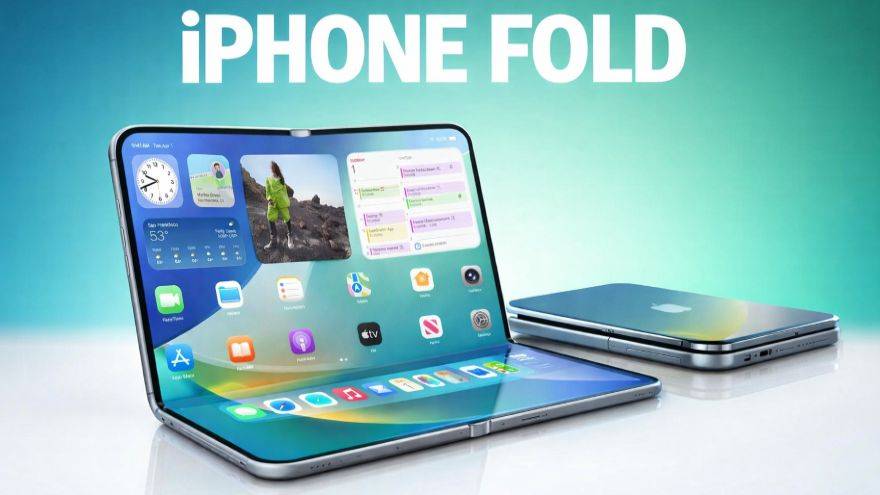
DUBAI – Apple’s long-rumoured entry into the foldable smartphone market is edging closer to reality, yet the timeline remains anything but certain.
Industry watchers, including Bloomberg’s Mark Gurman, maintain that the device is still on track for a fall 2026 unveiling alongside the iPhone 18 lineup. However, fresh reporting from Nikkei suggests that the project has encountered engineering challenges significant enough to raise the possibility of a delay extending into 2027.
The divergence in forecasts highlights both the complexity of Apple’s ambitions and the uncertainty surrounding one of its most closely watched product developments.
iPhone Fold launch outlook
According to Gurman, Apple’s foldable iPhone remains aligned with a September 2026 reveal, consistent with the company’s established annual product cycle. This view is supported by multiple earlier analyst reports, including projections that place the announcement alongside the iPhone 18 Pro models. However, shipments may not begin immediately. Analyst Tim Long has indicated that Apple could opt for a staggered rollout, with deliveries starting as late as December 2026.
Such a strategy would not be unprecedented. Apple has previously separated announcements and releases, as seen with devices like the iPhone X in 2017. In that case, Apple unveiled the product in September but delayed its market availability until November, allowing additional time for production and refinement. A similar approach could be applied to the foldable model, especially given the complexity of the device.
Engineering hurdles
The latest Nikkei report, citing sources familiar with Apple’s internal processes, suggests that the company has encountered unexpected issues during the engineering test phase. These challenges are reportedly more complex than initially anticipated and are tied to product development rather than supply chain constraints. One source noted that “more issues than expected have emerged during the early test production phase,” adding that additional time is required to address and adjust the design.
Apple's foldable snags and OpenClaw coming to smartglasses https://t.co/LZeLw2zhSM
— Nikkei Asia (@NikkeiAsia) April 9, 2026
Industry analysts emphasise that foldable devices are inherently more difficult to engineer than traditional smartphones. The hinge mechanism, display durability, and internal component alignment all require precise calibration. Apple’s efforts to achieve a near-invisible crease and ultra-thin design – reportedly as slim as 4.5mm when open – further add to the difficulty.
Bloomberg has previously highlighted that Apple is known for prioritising refinement over speed, often delaying products until they meet its strict quality standards.
Production timeline
Foxconn, Apple’s key manufacturing partner, has reportedly entered trial production for the iPhone Fold, according to industry leaker Instant Digital. This phase typically precedes mass production, which is expected to begin around July 2026, provided no further setbacks occur. Trial production allows Apple to identify and resolve any remaining issues before scaling up output.
However, Nikkei reports suggest that suppliers have already been warned of potential adjustments to their production schedules. If engineering issues are not resolved by early May, the timeline for mass production could be disrupted. This would have a cascading effect on the overall launch schedule, potentially pushing shipments into early 2027.
Barclays analysts had earlier suggested that a December 2026 launch was already a realistic expectation. This aligns with Apple’s past behaviour of spacing out flagship releases to manage production capacity. In this context, any additional delays could further extend the timeline beyond initial projections.
Design challenges
The iPhone Fold is expected to introduce a book-style design, opening into a larger internal display with an approximate 7.8-inch screen and a smaller external display of around 5.5 inches. The aspect ratio is expected to be closer to 4:3, similar to an iPad, making it well-suited for multitasking and split-screen use.
However, achieving such a design requires trade-offs. Reports indicate that Apple may forgo a triple-lens camera system, potentially omitting a telephoto lens to maintain the device’s thin profile. Additionally, Face ID may not be feasible due to space constraints within the device’s structure. Instead, Apple is rumoured to be exploring an iPad-style Touch ID implementation integrated into a side button.
Industry observers have also pointed out that Apple is focused on minimising the visibility of the display crease, a common challenge in foldable smartphones. Early leaks and dummy units suggest the company may have achieved a relatively subtle fold line, though real-world performance remains to be seen.
If launched, the iPhone Fold will enter a competitive segment already populated by major manufacturers such as Samsung, Google, OnePlus, Huawei, Honor and Motorola. These companies have spent years refining foldable technology, establishing a foothold in both hardware design and software optimisation.
Bloomberg’s Gurman and other analysts note that Apple’s entry could reshape the category, particularly given the company’s track record of entering established markets and elevating standards. However, expectations are high, and any delays could give competitors further time to strengthen their positions.
Despite ongoing speculation, Apple has not officially confirmed the existence of the device.